Every producer supplements. Not every producer knows if it’s working. The question most producers face is not whether to supplement, it’s how to do it most effectively.
Lick blocks have been the default for decades. However, they come at a cost: hours of labour hauling, dropping, and moving heavy blocks – and no guarantee every animal is getting what it needs.
Independent research spanning more than 20 years has repeatedly shown water supplementation delivers better results than traditional lick blocks.
A 2005 Meat & Livestock Australia (MLA) guide¹ put the potential cost savings at up to 75% compared to lick blocks.
Three trials put it to the test across real Australian conditions. In each one, uDOSE™ delivered higher nutrient intake to more animals, improved liveweight gain, and reduced supplementation costs.
The intake problem with lick blocks
Lick blocks work on voluntary consumption. Animals eat when they want, as much as they want. In theory, cattle self-regulate. In practice, the variation is significant; up to 20% have been found to non-eaters² across research, meaning they do not consume supplement at all.
At the same time, other animals over-consume. This results in uneven nutrient delivery across the mob, with no way to know which animals got what.
Water supplementation works differently. Nutrients are dosed directly into the drinking water which animals access every day. Therefore, each animal receives a supplement proportional to its body size. Intake is consistent, controlled, and measurable.
What independent government science showed
In 2020, The Department of Primary Industries (DPI) conducted a trial at Spyglass Beef Research Facility³. Thirty breeding cows and 20 growing steers grazed the same paddock. An auto-drafter split them into two treatment groups – one group was supplemented on lick blocks, the other on uDOSE™ supplemented water.
As both groups grazed the same paddock, paddock effects were eliminated. Any difference in results came down to the supplementation method alone.
Spyglass results after 12 months – uDOSE™ outperformed lick blocks on every measure
- +35 kg liveweight per breeding cow+calf per year
- +22 kg liveweight per growing steer per year
- 27x more phosphorus reached cattle via uDOSE™ in the wet season – 8.2 g per AE per day, compared to just 0.3 g on lick blocks. At that level, blocks were delivering almost none of the target intake.
Commercial-scale results in Richmond
Government research under controlled conditions is valuable. It removes variables and isolates the effect. But producers also want to know what happens at real-world scale, on a real station, with real commercial pressures.
A trial conducted in Richmond, QLD⁴ provided that answer. Over two consecutive seasons, 750 heifers were split across two paddocks – one supplemented with lick blocks, one with uDOSE™. The trials ran in very different conditions.
Richmond Trial 1 – Drier season (Jul 2024 to Apr 2025, 271 days, 410 mm rainfall)
- 58.3% of uDOSE™ cattle hit the 300 kg sale weight, compared to 36.7% on lick blocks
- 53 g higher average daily gain per head on uDOSE™
- $33 more gross revenue per head on uDOSE™
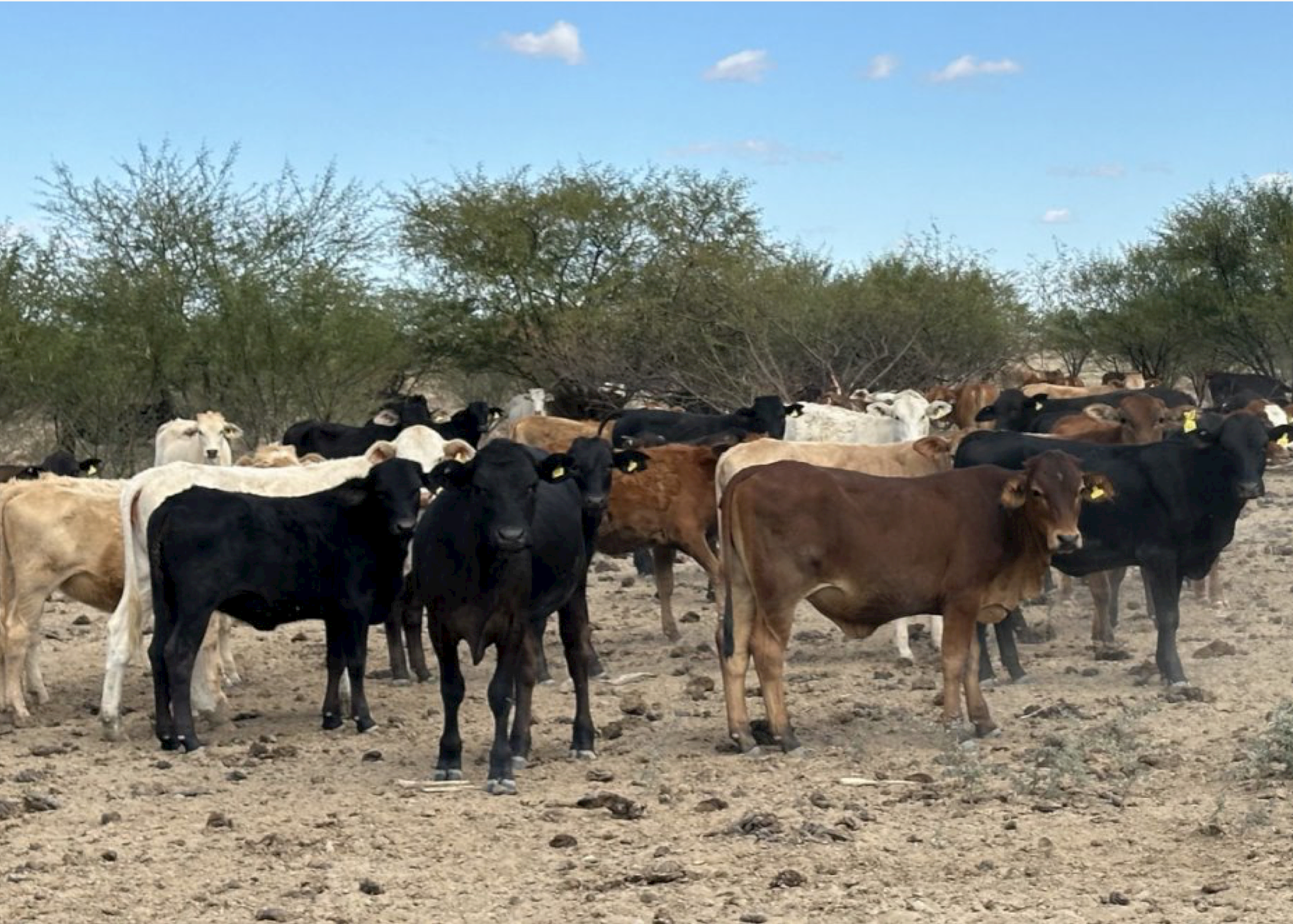
Richmond Trial 2 – Extreme wet season (Oct 2025 to Mar 2026, 158 days, 715 mm rainfall)
- Both groups achieved the same finished weight
- 62.5% lower supplement cost with uDOSE™ ($8.68 vs $23.16 per head)
- 30% less urea consumed by uDOSE™ cattle – same finished weight, lower input costs
The wet season trial was the harder test. With 715 mm of rainfall of the trial period, cattle drank from puddles and surface water, reducing trough intake significantly. Even so, water supplementation delivered the same finished animal weight at roughly one-third of the supplement cost.
Why water supplementation produces better results
The production advantage comes down to one thing: reliable intake. Water supplementation removes the variability that lick blocks can’t control.
Consistent intake
Cattle drink in proportion to body size. Every animal in the mob is supplemented, every day. No non-eaters, no over-consumers.
Accurate dosing
uDOSE™ delivers 99% dosing accuracy. Dose rates can be stepped up gradually during urea adaptation and stepped down quickly before a rain event – reducing toxicity risk in a way lick blocks can’t manage.
Remote control
Dose rates can be adjusted from anywhere via satellite through the uHUB platform. No need to physically visit the water point to make a change.
Real-time data
uHUB delivers daily intake figures per water point. Producers know exactly what their cattle consumed – no waiting time to find out what cattle consumed.
What this means for your operation
Three separate trials. Three different conditions. The same outcome every time, which is the reason why producers across Australia are switching to water supplementation:
- Reliable nutrient intake – every animal, every drink
- Lower labour – no moving or refilling blocks
- Reduced costs – less supplement waste
- Better productivity – healthier cattle, better gains
If you’re still running lick blocks, the data is worth a look. The trial results are available to download.
Our team has helped producers across Australia improve their results. Call us, let’s boost yours.
Sources
– ¹ Entwistle, K. & Jephcott, S. (2005). Water medication: a guide for beef producers. Meat & Livestock Australia. mla.com.au
– ² Dixon, R.M., White, A., Fry, P. & Petherick, J.C. (2003). Effects of supplement type and previous experience on variability in intake of supplements by heifers. Australian Journal of Agricultural Research 54, 529–540.
– ³ Muller, J. (2022). Differential impacts of water medication and blocks for supplementing beef cattle – Preliminary results, July 2020 to July 2021. Department of Agriculture & Fisheries, Spyglass Beef Research Facility. Used by courtesy of the State of Queensland.
– ⁴ DIT AgTech with AJM Pastoral (2024–2026). Commercial trials – Trial 1 and Trial 2. Richmond QLD.